
Cash Stuffing Envelope System: A Beginner Guide to Mindful Spending
Discover why cash stuffing went viral. Learn how the physical cash envelope method curbs overspending and builds tangible financial discipline.
Guilt-Free Spending Allowance
Find your daily fun allowance before stuffing your cash envelopes.
In an era where paying for anything takes a single tap on a phone or smartwatch, spending money has become almost invisible. You do not see physical cash leaving your hand. You just see a green checkmark on a screen.
This frictionless spending makes it easy to go over budget without realizing it until your statement arrives weeks later.
To combat digital spending fatigue, millions of people are turning back to a classic personal finance method updated for today: cash stuffing.
In this guide, you will learn what cash stuffing is, why handling physical cash curbs overspending, how to set up your envelope categories, and digital alternatives for modern banking.
What Is Cash Stuffing?
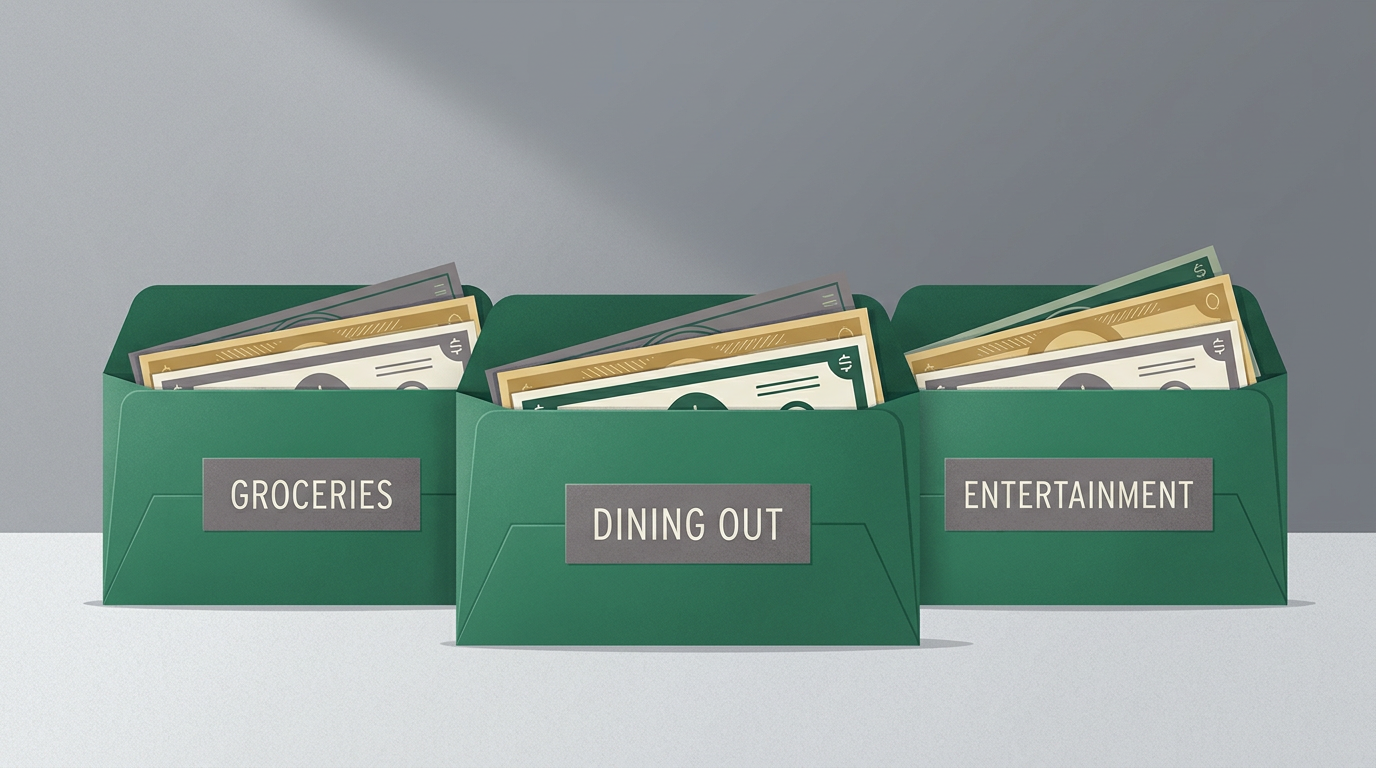
Cash stuffing is a visual, tactile budgeting system where you withdraw physical cash from your bank account on payday and divide it into labeled envelopes or binder pockets for specific spending categories.
The categories typically cover variable everyday expenses like groceries, dining out, gas, clothing, personal care, and entertainment.
When you go shopping for groceries, you take cash out of your Groceries envelope. When that envelope is empty, spending in that category stops completely until the next payday.
The concept was originally popularized decades ago as the cash envelope method. Its recent viral comeback under the name cash stuffing proves that physical boundaries still beat digital willpower.
The Psychology: Why Physical Cash Hurts More to Spend
Behavioral economists have studied the difference between cash and card payments for years. They call the psychological discomfort of spending money the pain of paying.
When you swipe a credit card or use Apple Pay, your brain registers very little friction. The card comes right back to your wallet, and your cash balance is hidden inside an app.
When you hand over a 50 dollar bill from a physical cash envelope, three things happen instantly:
- Visual Depletion: You physically see the cash envelope get thinner.
- Tactile Friction: Giving away paper money feels real and permanent.
- Instant Hard Limit: When the envelope hits zero, there is no credit balance to tap into.
This natural friction causes people to spend 15 to 20 percent less on variable expenses compared to paying with credit cards.
How to Set Up Your Cash Stuffing System Step by Step
Starting cash stuffing takes less than 30 minutes. Follow these five simple steps:
Step 1: Choose Your Cash Categories
Cash stuffing is designed for variable, in-person expenses. Do not use cash for fixed online bills like rent, utilities, or loan payments. Pay those directly online.
Pick four to six everyday categories where you tend to overspend:
- Groceries and household supplies.
- Restaurants, coffee, and food delivery.
- Transportation and gas.
- Personal care, haircuts, and cosmetics.
- Entertainment, hobbies, and weekend fun.
- Miscellaneous small purchases.
Step 2: Determine Your Monthly Cash Allocations
Look at your overall budget and decide how much cash each category gets for the pay period.
For example, if you budget 400 dollars for groceries every two weeks, write 400 dollars on your Groceries envelope.
Step 3: Withdraw the Cash on Payday
On payday, visit your bank teller or ATM and withdraw the total cash needed for all your envelopes. Ask for specific bill denominations (20s, 10s, 5s) so filling the envelopes is easy.
Step 4: Stuff the Envelopes
Place the exact designated cash into each labeled envelope or binder pocket. Your cash stuffing is complete.
Step 5: Spend Only from the Specific Envelope
When you go out for dinner, pay using cash from your Restaurants envelope. Never borrow cash from one envelope to cover overspending in another unless you consciously adjust your budget.
What to Do with Leftover Cash at the End of the Month
If you have cash remaining in an envelope at the end of the pay period, you have two great options:
- Roll It Over: Leave the extra cash in the envelope so you have a bonus buffer for the upcoming month.
- Challenge Sweep: Transfer the leftover cash directly into a high yield savings account or a sinking fund for a bigger goal like a vacation.
Digital Cash Stuffing: The Modern Alternative
If carrying physical paper cash around feels unsafe or inconvenient, you can use digital cash stuffing instead.
Many modern digital banks and budgeting apps allow you to create digital sub-accounts, savings buckets, or virtual envelopes. You set strict spending limits on individual categories, giving you the same boundary protection with digital convenience.
How EasyBudget Complements Your Cash Envelope Setup
You can use EasyBudget free tools to calculate your envelope numbers:
- Use our Guilt Free Spending Allowance Calculator to find your exact cash allocations for fun categories.
- Use our Group Expense Splitter to calculate cash settlements when splitting group costs with friends.
- Use our Work Hours Price Converter to evaluate purchases before opening your envelope.
Summary
In a world designed to make spending effortless, cash stuffing puts healthy boundaries back in your control.
Grab a few paper envelopes today, assign your cash categories, and experience the satisfaction of knowing exactly where your money goes.
Written by EasyBudget Team
Fact-Checked • 2026 EditionOur editorial team develops free, privacy-first personal finance calculators and independent money management guides. We cross-reference all math against federal savings guidelines and macroeconomic benchmarks.