
How to Stop Impulse Buying With the 48-Hour Work-Hour Test
Reclaim your monthly savings by converting temptation prices into actual working hours and applying a forced 48-hour cooling-off rule.
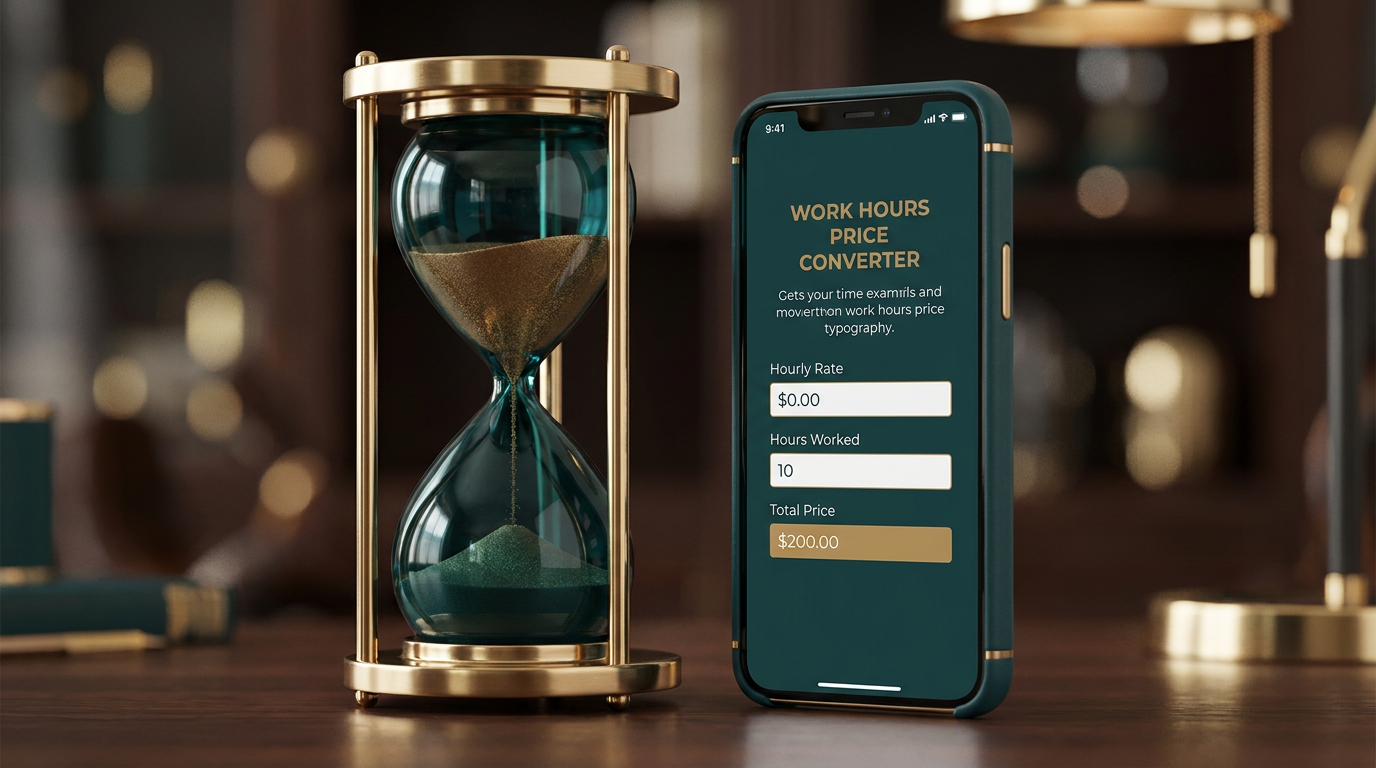
Work Hours Price Converter
Convert any purchase price into exact work hours and days based on your real take-home pay.
Modern retail is engineered to bypass your rational brain. Frictionless online checkout, targeted social media ads, one-click buy buttons, and flash discounts make it remarkably easy to spend $50 or $150 without a second thought.
While a single impulse purchase rarely breaks a budget, habit impulse buys create a constant drain on your monthly cash flow. At the end of the month, you are left wondering where several hundred dollars went, even though you cannot point to any major necessary expense.
If willpower alone has failed to curb impulse buying, you need a structural framework that reintroduces healthy friction into spending decisions. The 48-Hour Work-Hour Test combines psychological cooling periods with clear wage math to curb impulse spending effortlessly.
The Psychology of the Impulse Buy
Impulse buying relies on immediate dopamine release. When you spot a stylish jacket, a new tech gadget, or an upgraded home accessory, your brain anticipates the pleasure of ownership. Retailers intentionally minimize buying friction so you complete the transaction before your brain's decision-making center evaluates long-term trade-offs.
When you buy on impulse, two major cognitive distortions occur:
- Price abstraction: Seeing "$120" on a screen feels abstract. It does not immediately connect in your mind to the physical labor required to earn that money.
- Urgency bias: Limited-time deals and low stock notifications create artificial scarcity, convincing you that delaying a purchase means losing out.
To break this pattern, you must break the dopamine loop by forcing time delay and reframing cost into tangible trade-offs.
---
Part 1: Converting Dollars into Exact Work Hours
The first half of the test strips away the abstraction of currency by converting purchase prices into hours of your life spent working.
When you look at a $250 jacket, you are not just spending 250 numerical units. You are trading a specific chunk of your finite time and energy.
Step 1: Calculate Your Real Net Hourly Wage
Most people evaluate purchases against their gross hourly pay. If you earn $30 per hour, you might assume a $150 item costs 5 hours of work. But that calculation overlooks income taxes, payroll deductions, commuting costs, and work-related expenses.
Your real net hourly wage is what lands in your bank account after all deductions and work-related overhead.
Formula:
`Real Net Hourly Wage = Total Net Take-Home Pay / Total Hours Devoted to Work`
For example:
- Gross Monthly Salary: $5,000 ($31.25/hr gross)
- Net Take-Home Pay: $3,600
- Actual Work Hours + Commute: 180 hours per month
- Real Net Hourly Pay: $3,600 / 180 = $20.00 per hour
Evaluating Purchases in Life Hours
Now look at common non-essential impulse purchases through the lens of your $20/hr real net wage:
| Impulse Purchase Item | Store Price | Equivalent Work Hours Required |
|---|---|---|
| :--- | :--- | :--- |
| Fancy Coffee & Pastry | $15 | 45 minutes of working time |
| Designer Sneakers | $180 | 9 hours (1.1 full work days) |
| High-End Wireless Earbuds | $260 | 13 hours (1.6 full work days) |
| Weekend Shopping Spree | $500 | 25 hours (over 3 full work days) |
When you realize those $260 earbuds require sitting at your desk working from Monday morning until Tuesday afternoon, the value proposition shifts dramatically.
You can use our interactive Work Hours Price Converter to instantly convert any item price into exact work hours based on your personal take-home pay.
---
Part 2: Enforcing the 48-Hour Cooling-Off Rule
Translating prices into work hours provides mental clarity. Combining that clarity with a mandatory 48-hour cooling period stops impulse spending entirely.
How the 48-Hour Protocol Works
When you feel the urge to make a non-essential purchase over a set threshold (such as $30):
- Pause immediately: Close the browser tab or step away from the store display.
- Calculate the work-hour cost: Use your net hourly rate to determine how many hours or days of labor the item costs.
- Log the item in a wishlist note: Write down the item name, price, store, and the exact timestamp 48 hours from now.
- Wait 48 full hours: Do not revisit the product page during this waiting period.
What Happens During the 48 Hours?
During those two days, the initial dopamine rush fades. Your brain returns to a baseline state, allowing rational evaluation.
When the 48-hour timer expires, check your wishlist log and ask yourself three questions:
- *Do I still want this item as much as I did two days ago?*
- *Is this item worth trading [X] hours of my labor?*
- *Would I rather have this item, or keep that cash in my savings account?*
In over 70% of cases, you will find that after two days, the urge to buy has vanished completely. You simply delete the entry from your list and keep your money.
---
Practical Tactics to Reduce Shopping Friction Online
In addition to the 48-Hour Work-Hour Test, implement these structural barriers to make online impulse buying harder:
1. Remove Saved Credit Card Data
Delete saved credit card details from auto-fill settings in your web browser and online retailer accounts. Forcing yourself to physically stand up, find your wallet, and manually type in 16 credit card digits creates friction that stops many impulse purchases in their tracks.
2. Unsubscribe From Marketing Emails
Retail marketing emails exist solely to create artificial urgency and trigger impulse visits. Unsubscribe from promotional lists or use a dedicated junk email address for shopping accounts so sales alerts do not clog your daily inbox.
3. Establish a Monthly Guilt-Free Spending Allowance
Stopping impulse buys does not mean living an ascetic life with zero fun purchases. Allocate a set monthly dollar amount for personal fun money using our Guilt-Free Spending Allowance.
When you have a dedicated fun money pool, you can buy items you love without feeling guilty or damaging your essential budget goals.
---
Measuring Your Progress and Savings Impact
To build momentum, track every impulse purchase you successfully walk away from using the 48-Hour Work-Hour Test.
Create a simple note on your phone called "Saved by the 48-Hour Rule". Each time you let a 48-hour timer expire without buying, log the price of the item you avoided.
Watching that total grow from $120 to $450 to $1,200 over a few months proves how much buying power you reclaim simply by giving your rational mind time to weigh in.
---
Final Thoughts
Mindful spending is not about deprivation; it is about intentionality. The 48-Hour Work-Hour Test puts you back in control of your hard-earned money.
Before your next non-essential purchase, take a breath, convert the price into hours of your life, and wait 48 hours. Your future financial security will thank you.