
Zero Based Budgeting Explained: Give Every Dollar a Job
Learn how zero based budgeting works, why assigning every dollar a job stops overspending, and how to build your first zero based budget.
Guilt-Free Spending Allowance
Give every dollar a job and calculate your monthly category allocations.
Have you ever looked at your bank account at the end of the month and wondered where all your money went? You earned a good paycheck, paid your main bills, but somehow the remaining balance vanished into thin air.
This happens when money stays unassigned. When cash sits in a checking account without a specific purpose, you naturally spend it on impulse purchases, food delivery, and small daily luxuries.
Zero based budgeting fixes this problem completely. By giving every single dollar a job before the month starts, you take total control over your cash flow.
In this guide, you will learn the mechanics of zero based budgeting, how it compares to other methods, and how to create your first zero based plan step by step.
What Is Zero Based Budgeting?
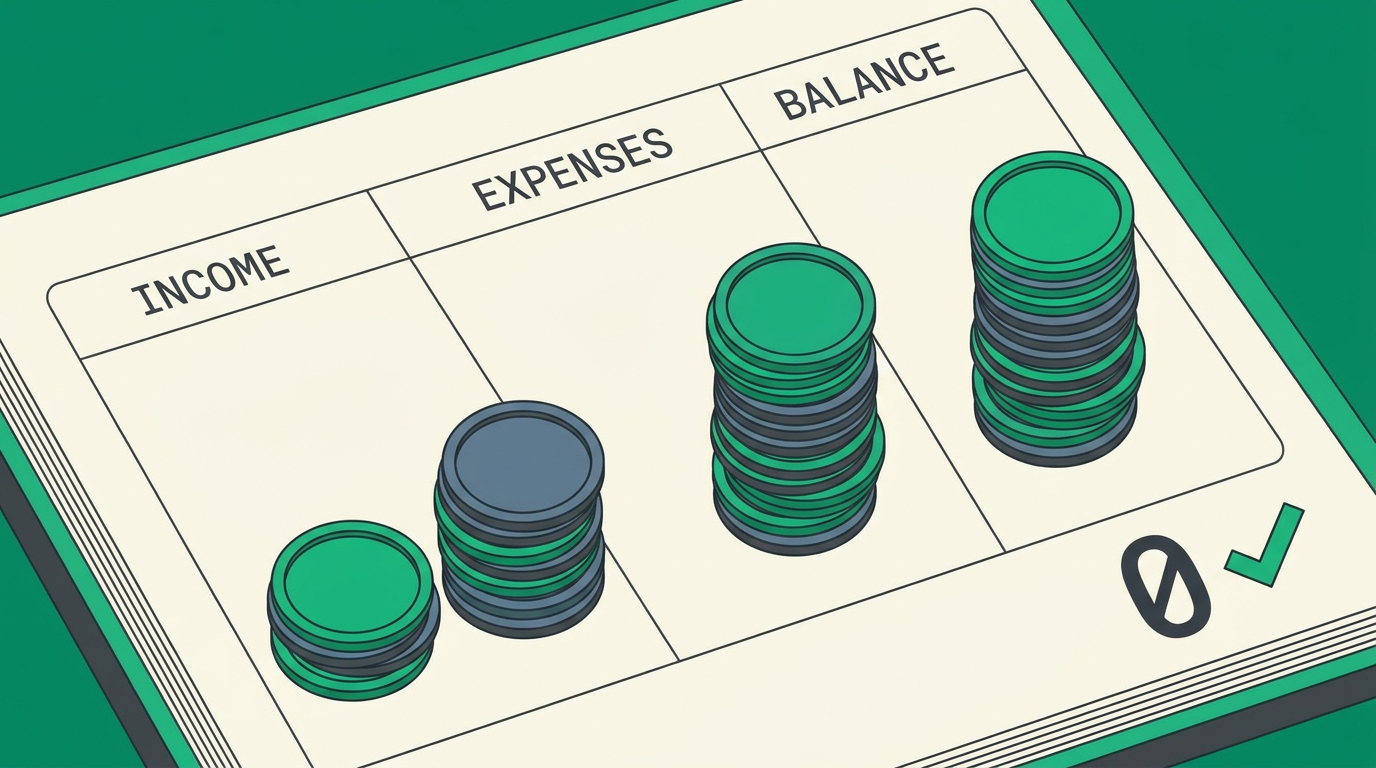
Zero based budgeting is a financial method where your income minus your expenses and savings equals exactly zero.
Income minus Expenses and Savings equals Zero.
This does not mean you have zero dollars in your bank account. It means that every dollar you earn is assigned to a specific category before you spend it.
Whether a dollar goes toward rent, groceries, retirement, debt payoff, or weekend fun, that dollar has a designated mission. Unassigned money is not allowed.
Why Giving Every Dollar a Job Works
The psychology behind zero based budgeting is simple but effective.
When you use traditional budgeting, you pay your fixed bills and try to save whatever is left at the end of the month. Unfortunately, there is rarely anything left because unassigned cash gets spent automatically.
Zero based budgeting forces you to make decisions on paper before real money leaves your account. Here are three reasons why this method transforms spending habits:
1. Eliminates Mindless Waste
When every dollar is locked into a category, you immediately notice when you overspend. To spend an extra 50 dollars on clothing, you must consciously move 50 dollars out of another category like dining out or savings.
2. Prioritizes Savings First
Instead of treating savings as an afterthought, zero based budgeting treats savings and investments as essential monthly expenses. Your savings goals get funded on paper before you assign money to discretionary spending.
3. Provides Total Spending Clarity
You never have to guess whether you can afford something. You simply check your designated category balance. If your dining out category has 40 dollars left, you know exactly what you can spend.
Step by Step: How to Build Your First Zero Based Budget
Creating a zero based budget takes about 20 minutes. Follow these five simple steps:
Step 1: Write Down Your Total Monthly Net Income
Start with the exact amount of take-home pay you expect to receive this month after taxes. Include your primary job salary, side hustle income, freelancing pay, or rental income.
For example, suppose your net monthly income is 3500 dollars.
Step 2: List Your Fixed Essential Needs
Write down all your non-negotiable monthly expenses. These are the bills required to keep your basic life running:
- Rent or mortgage: 1200 dollars
- Utilities and internet: 200 dollars
- Basic groceries: 400 dollars
- Car insurance and transport: 250 dollars
- Health insurance and minimum debt payments: 150 dollars
Total fixed needs equal 2200 dollars.
Step 3: Assign Money to Savings and Debt Payoff
Next, allocate funds to your future self. Move money into emergency savings, retirement accounts, or extra debt payoff:
- High yield emergency savings: 300 dollars
- Index fund investments: 300 dollars
- Extra debt payoff: 200 dollars
Total savings and debt paydown equal 800 dollars.
Step 4: Allocate Discretionary Categories
Now look at your remaining balance. You started with 3500 dollars. After fixed expenses (2200 dollars) and savings (800 dollars), you have 500 dollars left.
Assign that 500 dollars to personal categories:
- Dining out and coffee: 200 dollars
- Entertainment and hobbies: 150 dollars
- Subscriptions and gym: 50 dollars
- Personal care and clothing: 100 dollars
Step 5: Check That Your Balance Hits Zero
Add up all your categories: 2200 dollars (fixed) + 800 dollars (savings) + 500 dollars (discretionary) = 3500 dollars.
3500 dollars income minus 3500 dollars allocated equals Zero. Your budget is complete.
How Zero Based Budgeting Compares to the 50/30/20 Rule
Many people wonder whether zero based budgeting is better than the popular 50/30/20 rule.
The 50/30/20 rule is a high level guideline that suggests spending 50 percent on needs, 30 percent on wants, and 20 percent on savings. It is great for beginners who want a quick estimate.
Zero based budgeting is a tactical execution system. You can actually use both together. Use the 50/30/20 rule to decide your overall targets, then use zero based budgeting to assign every single dollar to specific jobs within those percentages.
Tips for Managing Variable Income or Unexpected Bills
Zero based budgeting works for irregular income or fluctuating bills with two simple tweaks:
- Use a Buffer Category: Include a 100 dollar buffer category called Miscellaneous in your budget. This catches small unexpected price shifts in gas or groceries.
- Budget on Lowest Expected Income: If you are a freelancer or commission worker, build your baseline budget using your lowest average monthly earnings. When you earn extra in good months, assign those bonus dollars directly to savings or sinking funds.
How EasyBudget Complements Your Budget
You can combine zero based budgeting with EasyBudget free micro tools:
- Calculate your exact housing allocation using our Rent Burden Calculator.
- Determine your fun money limits using our Guilt Free Spending Allowance Calculator.
- Identify subscription leaks using our Subscription Audit Calculator.
Summary
When every dollar has a clear job, money stress disappears. You stop wondering where your money went and start telling it where to go.
Set up your zero based budget for the upcoming month today and experience complete financial clarity.
Written by EasyBudget Team
Fact-Checked • 2026 EditionOur editorial team develops free, privacy-first personal finance calculators and independent money management guides. We cross-reference all math against federal savings guidelines and macroeconomic benchmarks.